Pipeline Venting: How to Reduce the Risk of Liquids
In cross compression and flaring applications for piping system and pipeline maintenance, there is a high probability that liquids and debris will be encountered. ZEVAC’s Doug Sahm explains why that’s a problem for traditional compressors – and how operators can reduce the risk.
Pipeline venting is the controlled release of gas from a pipeline system into the atmosphere. It’s most commonly carried out to support planned maintenance, or as an emergency pressure-relief measure.
For pipeline operators trying to cut voluntary blowdown emissions, there are two common methods: flaring, and cross compression (also known as vent gas recovery). Both follow a similar project flow, but they carry a risk that’s easy to underestimate: liquids.
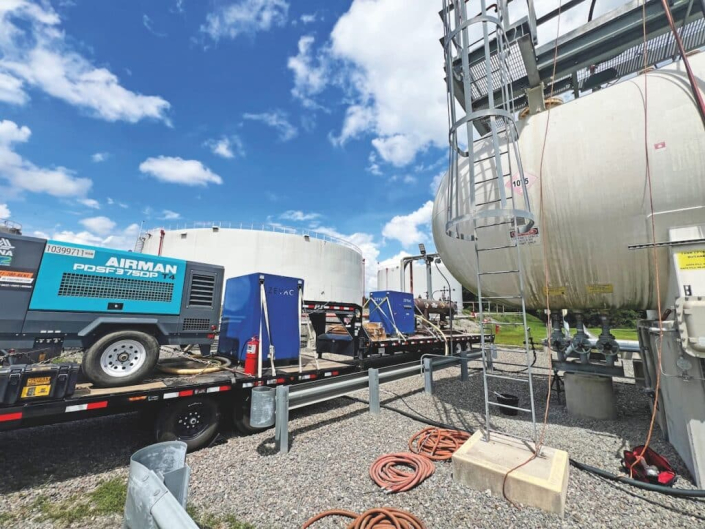
Cross Compression and Vent Gas Recovery: How the Process Works
Cross compression (vent gas recovery) and flaring are the two most widely used methods for reducing voluntary blowdown emissions during pipeline maintenance.
The general project sequence looks like this:
- Isolate the pipe section that needs to be depressurised
- Connect temporary equipment – a flare (drawdown connection only) or a compressor (drawdown and discharge connections)
- Activate the equipment to remove pressurised product from the pipe.
Both methods bring the system down to a safe pressure so maintenance can go ahead. In almost all of these pre-maintenance depressurisation applications, some degree of liquid will be encountered. Typical liquids encountered during pipeline venting include:
- Water vapour and water
- Ethane, propane and butane
- C5+ hydrocarbons
- Glycol or methanol
- Compressor oil
- Solvents, biocide and corrosion inhibitor.
Flaring Hazards During Pipeline Venting
When flaring, the pipeline’s contents are combusted to remove them. For these purposes, flaring is extended to also cover thermal oxidation, enclosed and open flares, and other combustion-driven processes.
Liquid overflow is consistently identified as the single biggest hazard in flaring operations, and it’s been well documented in the aftermath of past incidents.
Facilities with controlled environments and known process conditions can design in a range of protections against liquid carryover.
Field maintenance sites are a different story: process conditions are often unknown, and even experienced flare providers need large or redundant protection systems to manage the risk.
In practice, field flaring is frequently carried out with little to no protection against liquid carryover at all. And even where liquid knock-out protection is in place, slug flow and thermal effects can still bypass typical separator systems and cause carryover.
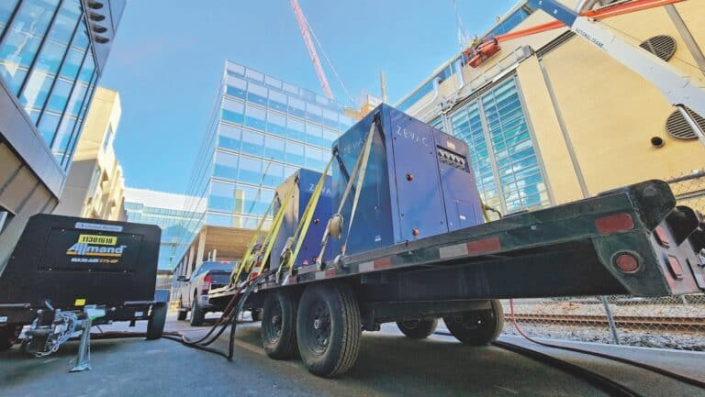
Why Traditional Compressors and Liquids Don’t Mix
Liquid ingress into a traditional compressor is a serious problem – often resulting in catastrophic failure. It’s a well-understood risk, backed by extensive industry literature and an entire category of equipment – knock-outs, filter separators and inlet scrubbers – built specifically to keep liquids out of compressors at nearly every station.
Most compressor systems also rely on inlet regulation not designed to handle liquids or debris, along with fuel gas and control systems that need clean, dry gas to function. If a component like an inlet regulator fails, it can over-pressurise the compressor and any other equipment that regulator was meant to protect.
When a compressor does fail due to liquid ingestion, the release of process gas and liquids creates two further hazards:
- A fire hazard, since the released gas may sit close to electronics, engines or other hot components
- A risk of secondary projectiles from the gas release, which can cause additional injury or property damage
Because of this, most compressor stations run multiple lines of defence against liquids – station inlet, slug catcher, separator, suction filter separator and compressor, often with an additional knock-out separator immediately ahead of the compressor frame as a last line of defence.
Which makes it somewhat paradoxical that in many cross compression applications – where process conditions are largely unknown and liquids are almost guaranteed – there’s commonly no liquid protection in place at all.
Reducing Pipeline Venting Risk with ZEVAC
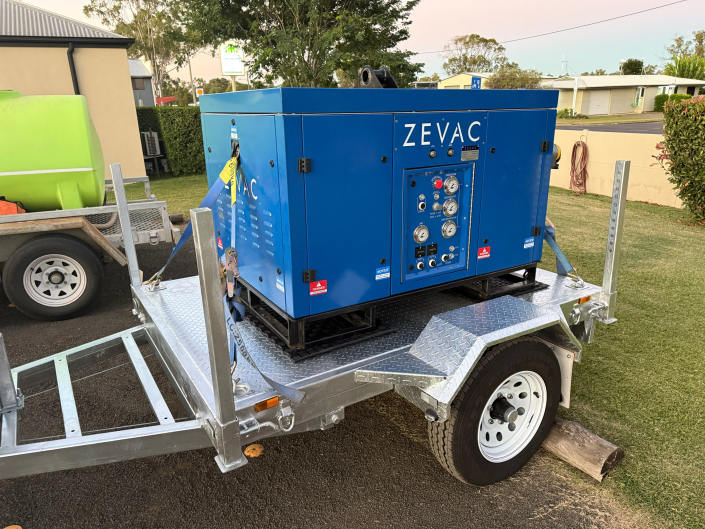
Unlike traditional compressors, ZEVAC is designed to handle liquid flow of up to 100 per cent.
ZEVAC compressors were originally developed to solve two-phase blowdowns in wet gas gathering environments, where fluid content can range from 100 per cent liquid to 100 per cent gas – and anything in between. Today it’s used across NGL, condensate, butane and propane applications, as well as standard natural gas.
That tolerance for liquids, gases and mixed-phase fluids comes down to the design of the drive train and compression system.
ZEVAC compressors are linear positive displacement compressors, rather than the rotary reciprocating or centrifugal design used in traditional equipment. Linear compressors are highly tolerant of liquids because of the compressibility of the air within the drive train.
It’s a meaningful difference. In a traditional compressor, the pistons connect directly to the crankshaft and prime mover, running at high speed with significant inertia – so a sudden stoppage caused by liquid ingress generates extreme hydraulic force in the cylinder almost instantly.
That force stops the piston, and the shock load travels back through the connecting rod, the crankshaft and the drive train until it finds – and breaks – the weakest point.
A ZEVAC compressor responds differently. If the cylinder fills with liquid, the lack of inertia in the drivetrain, combined with the compressibility of the compressed-air prime mover, means the piston simply stops while air pressure rises. The ZEVAC unit then acts as a positive displacement pump, clearing the liquid from the cylinder rather than being damaged by it.
Once cleared, the unit is undamaged and gas transfer can resume – or further liquids can be processed through.
In short: ZEVAC reduces the risk that’s inherent in handling liquids during cross compression and flaring applications – the exact scenario where traditional compressors are most exposed.
Pipeline Venting and Vent Gas Recovery: Common Questions
Is cross compression the same as vent gas recovery?
Yes. “Cross compression” and “vent gas recovery” refer to the same method of transferring gas out of an isolated pipeline section, rather than releasing it through flaring or blowdown.
Why do traditional compressors fail during pipeline venting operations?
Because liquids are almost always present during pre-maintenance depressurisation, and traditional rotary compressors aren’t built to handle them. Liquid ingress can stop a piston suddenly, generating hydraulic shock loads that travel through the drive train until a component fails.
What makes ZEVAC different from a standard compressor?
ZEVAC uses a linear positive displacement design rather than a rotary drive train, allowing it to handle liquid flow of up to 100 per cent without the shock loading that damages traditional compressors.
ZEVAC, Available Through Tremco Pipeline Equipment
ZEVAC is available across Australia, New Zealand and the Pacific Islands exclusively through Tremco Pipeline Equipment. Our team is fully ZEVAC trained and can support planning, on-site operation and technician training for your next cross compression or vent gas recovery project.
To find out how ZEVAC can de-risk your next pipeline venting job, get in touch with Brett Trembath at Tremco Pipeline Equipment on (07) 3344 1066 or sales@tremcopipeline.com.au

